
By Renée Downes-Schrikker
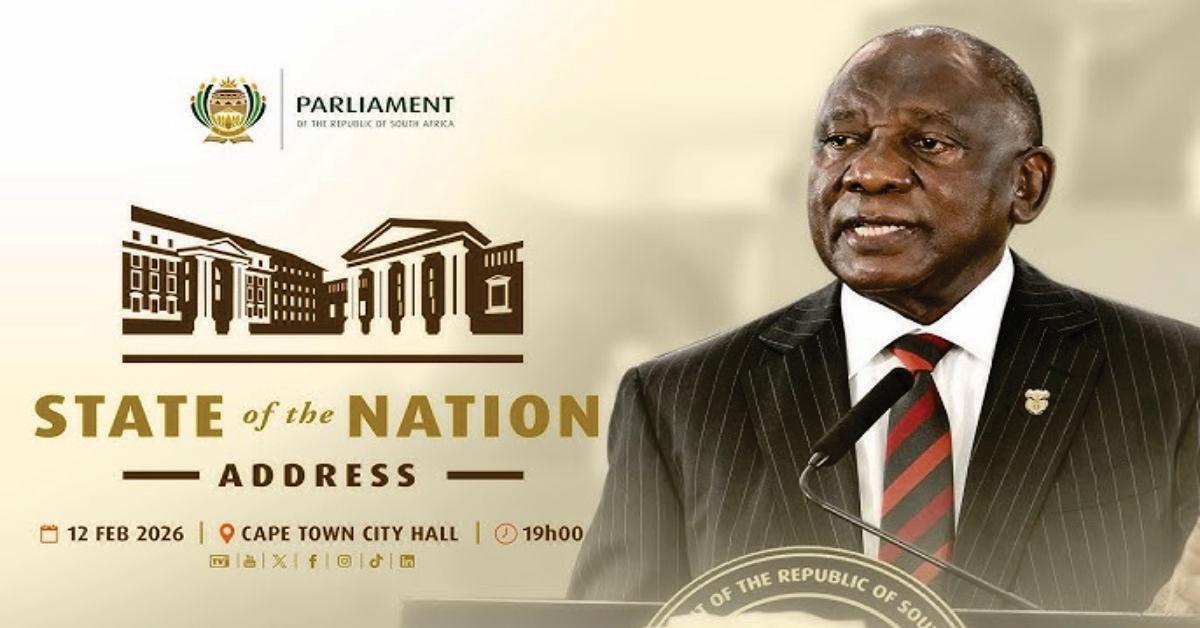
This week, I take my place in Parliament not as a spectator, but as a journalist officially accredited to cover the 2026 State of the Nation Address. It is an honour I carry with deep respect, because SONA is more than an annual political ritual, it is a moment of national reckoning.
On Thursday, 12 February, the President will once again stand before the nation to tell us where South Africa stands and where government intends to take us. There will be ceremony, symbolism, red carpets and carefully choreographed moments. But beyond the pageantry, South Africans are asking a far more serious question: what will actually change in our daily lives?
As journalists, our role is not to be swept up by the spectacle. Our responsibility is to listen critically, to interrogate promises, and to translate policy-speak into real-world impact. From the pavements of townships to small business corridors, from classrooms to clinics, people are tired of recycled commitments. They are waiting for delivery.
Going into SONA 2026, the economy looms large. South Africans are under pressure. Jobs are scarce, small businesses are struggling to stay afloat, and the cost of doing business continues to rise. This year, I am hoping to hear not just ambitious growth targets, but clear, practical steps: How will government remove barriers for entrepreneurs? How will small and medium enterprises be supported beyond press statements and pilot projects? Job creation cannot remain an abstract goal, it must be tied to timelines, funding, and accountability.
Closely linked to the economy is the question of social grants. With the rising cost of living, grants are no longer a safety net for the vulnerable alone; they are a lifeline for millions of households. Any discussion around social support must acknowledge this reality. South Africans need certainty, not speculation. Will grants keep pace with inflation? Will government ensure dignity for those who depend on them? This is not a side issue, it is central to social stability.
Infrastructure is another fault line that cannot be ignored. Reliable electricity, efficient transport, and functioning basic services are the backbone of economic growth. Without them, policy promises collapse under their own weight. Load shedding, water shortages, and failing municipal systems are not just inconveniences; they are structural barriers to development.
SONA 2026 must move beyond acknowledging these challenges and offer a credible path to fixing them.
Education, too, demands urgent attention. Young people remain South Africa’s greatest asset, yet also its most frustrated demographic. Access to quality schooling, meaningful skills training, and post-school opportunities will determine whether the next generation thrives or stagnates.
This SONA must speak directly to youth unemployment, curriculum relevance, and pathways from education into work. Hope without opportunity is a dangerous thing.
Then there are the issues that shape daily life most sharply: crime, governance, and service delivery. Communities want to feel safe. They want to trust the institutions meant to serve them. They want to see corruption confronted, not explained away.
Governance failures are no longer abstract debates they show up in broken streetlights, delayed ambulances, and unanswered service delivery complaints.
From my vantage point as a journalist, SONA 2026 will be measured not by applause in the chamber, but by resonance outside it. South Africans are politically literate and deeply aware of the gap between words and action. They are listening for honesty, for realism, and for leadership that understands the urgency of now.
This address comes at a time when public trust is fragile. Rebuilding it will require more than confident rhetoric. It will require transparency, consistency, and the courage to admit where government has fallen short and how it plans to do better.
I will be in Parliament this week, listening, observing, and asking the questions that matter. Not on behalf of politicians, but on behalf of ordinary South Africans who deserve more than promises. They deserve progress.
I’ll be sharing updates and insights as the story unfolds, so keep it locked right here.
Tune in to Afrikaap Radio for more news on the SONA 2026.